
Microwave Oven Safety Guidelines: 7 Essential Steps
Table of Contents
- Microwave Oven Safety Guidelines: What You Need to Know
- Choose Microwave-Safe Containers and Cookware
- Follow Package, Recipe, and Appliance Instructions
- Microwave Food Safety and Reheating Best Practices
- Manage Microwave Hot Spots and Standing Time
- Microwave Burn Prevention: Handling Hot Food and Dishes
- What to Do If Your Microwave Sparks, Smokes, or Catches Fire
- Inspect Your Microwave Door, Seal, and Appliance
- Frequently Asked Questions
Last Updated: October 17, 2026
Microwave Oven Safety Guidelines: What You Need to Know
Using a microwave oven safely means understanding a few key rules, most are straightforward and take a moment to learn.
Microwave oven safety isn't complicated, but it matters. Burns happen fast, steam escapes suddenly, containers crack, and metal sparks; most of these incidents are preventable if you know what to do before, during, and after heating.
Choose Microwave-Safe Containers and Cookware
Not every dish belongs in a microwave oven. Some materials heat dangerously; others release harmful chemicals. Choosing the right container is your first line of defense.
Materials That Are Safe
Glass bowls and dishes heat evenly and don't leach anything into food.
Some plastics work, but only those marked "microwave-safe" on the bottom; they resist heat without melting or releasing chemicals.
Paper plates, paper towels, and parchment paper are fine for short heating times. Silicone containers made for microwave use also work well.
Stoneware and pottery are generally safe if they're glazed and have no metal trim.
Materials to Avoid
Metal of any kind should never go in a microwave oven: aluminum foil, forks, spoons, even metal trim on dishes.
Avoid plastics not marked microwave-safe, including many single-use takeout containers; they may melt or release chemicals like BPA when heated (Food safety tips for microwaves).
Melamine and some older ceramics with metallic glazes pose risks. If unsure, test a dish: microwave the empty container for one minute.
Sealed containers can trap steam and explode. Always vent lids or remove them before heating.
Follow Package, Recipe, and Appliance Instructions
Every microwave oven is different; power levels vary, and turntables may not work properly.
Follow recipe microwave guidance exactly; cooking times account for wattage and the food's starting temperature.
Check your microwave oven's manual for model-specific warnings; older microwaves have different safety considerations than newer ones.
Never override safety features like door interlocks or automatic shut-offs. These exist to protect you.
Microwave Food Safety and Reheating Best Practices
Heating food safely means thinking about how heat travels through food, how long it takes, and when it's actually done.
Safe Reheating Workflow
Start with thawed food whenever possible; partially frozen items create cold spots where bacteria survive.
Spread food evenly in a microwave-safe container rather than piling it in one spot, so heat reaches all parts.
Set your microwave oven to 50% power for delicate foods like leftovers to avoid overheating edges while the center stays cold.
Heat for half the estimated time, then check. Stir or rotate the food. Heat for the remaining time.
Thawing Frozen Food Safely
Never thaw food on the counter at room temperature. Bacteria multiply rapidly in the danger zone between 4°C and 60°C.
Use your microwave oven's defrost setting if it has one. This cycles power on and off to thaw more evenly.
Without a defrost function, use 30% power and check and rotate the food every few minutes.
Thaw smaller items in cold water instead.
Plan ahead and thaw food in the refrigerator overnight. This is the safest method, though it takes longer.
Manage Microwave Hot Spots and Standing Time
Microwave ovens don't heat food evenly. Understanding why this happens and how to fix it prevents burns and improves results.
Why Uneven Heating Happens
Microwaves emit energy that bounces around inside the oven, so some spots receive more energy than others; edges often heat faster than the center.
Denser foods heat slower than liquids; soup heats faster than rice.
Turntables help, but they don't guarantee even heating. Food shape and size matter too. A thick piece of chicken heats unevenly compared to thin slices.
100% Cotton Microwavable Bowl Cozy - Good Folk-flora →
Stirring, Rotating, and Standing Time
Stop halfway through cooking to stir, redistributing heat from the center toward the edges.
If you can't stir (like with a whole piece of fish), rotate the dish 180 degrees halfway through cooking.
After the microwave oven stops, let food sit one to two minutes so heat spreads evenly and reduces the risk of burns from sudden hot spots.
Always stir soups and sauces before eating. A spoon reveals whether the entire bowl has heated evenly.
Microwave Burn Prevention: Handling Hot Food and Dishes
The moment food comes out of a microwave oven, it's dangerous: the bowl is hot, steam rises, liquid can splash. Most microwave burns come not from the oven but from food and containers hotter than they look.
Check Food Temperature Before Eating
Never assume food is cool enough just because the microwave stopped; the container may be hotter than the food, or the edges hotter than the center.
Use a digital food thermometer and probe several spots: for a bowl, the center, edge nearest the door, and bottom; for a plate, the thickest and thinnest pieces.
Practical internal-temperature targets for microwave-reheated food:
- Poultry (chicken, turkey) and ground poultry: 74°C throughout.
- Ground meat (beef, pork, lamb): 71°C.
- Whole cuts of beef, pork, lamb, and veal: 63°C with a 3-minute rest.
- Fish and shellfish: 63°C, or until flesh is opaque and separates easily.
- Egg dishes and casseroles: 71°C.
- Leftovers and reheated prepared foods: 74°C to be safe across the board.
These targets align with common Canadian food-safety guidance. When in doubt, aim for 74°C; it covers most reheated foods.
Protect Your Hands and Surfaces
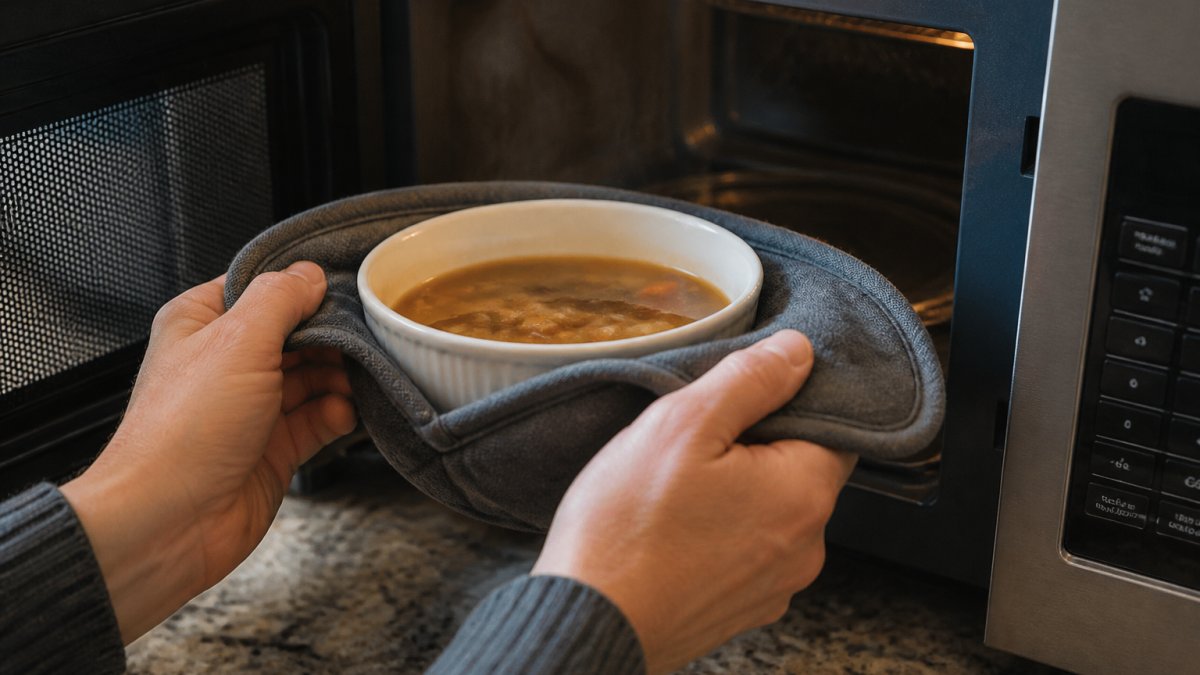
Use oven mitts or potholders when removing dishes from the microwave oven.
A microwave-safe bowl cozy designed for hot dishes offers excellent protection. These cozies grip securely and keep heat away from your skin.

Keep children away from the microwave oven while it's running and for several minutes after.
Never touch the oven door or vents immediately after use; they get very hot, and the vent can release a burst of steam when opened.
Open Lids and Plastic Film Carefully
Steam burns are among the most common microwave injuries. When removing a lid or plastic film, lift the far edge first and tilt the container away from your face; let steam escape before reaching in. Never lean over a container as you open it.
If a container is sealed tight, let it sit a minute so pressure equalizes, then open slowly.
What to Do If Your Microwave Sparks, Smokes, or Catches Fire
Most microwave incidents are small and stoppable in seconds, but only if you react in the right order. The single most important rule: keep the door closed and turn the appliance off at the wall or unplug it if you can reach the cord safely. Opening the door feeds oxygen to a fire and exposes you to steam, smoke, and flames.
If You See Sparking
Sparking (arcing) almost always means metal is inside the cavity: foil, twist ties, utensils, dishes with metallic trim, even some recycled paper products with metal flecks.
- Press Stop or open the door to cut power.
- Remove the metal item with tongs or oven mitts; never with your bare hands.
- Inspect the cavity for scorch marks or damaged walls. If the interior is pitted or burned, stop using the microwave.
- If sparking continues with no metal inside, the appliance has internal damage (often a failing waveguide cover). Stop using it and have it inspected by a qualified technician.
If You See Smoke
Light smoke from overheated food is common. Heavy, acrid smoke is not.
- Stop the microwave and keep the door closed.
- Unplug the appliance or switch off the circuit at the breaker if you can do so safely.
- Open windows and turn on the range hood or a fan to ventilate the kitchen.
- Do not open the microwave door until the smoke has cleared and the unit has cooled; opening it can release a concentrated burst of smoke and steam.
- Once cool, inspect the food and the cavity. Discard the food if it is charred, and clean the interior only after it has fully cooled.
If Flames Appear Inside
- Keep the door closed. Do not open it.
- Cut the power, press Stop, then unplug the unit or switch off the breaker if safe to reach.
- Do not use water. Water on an electrical appliance can cause shock and spread a grease fire.
- If the fire does not die down within a few seconds after power is cut, leave the kitchen, close the door behind you, and call 911.
- Only if the fire is small and contained and you have a fire extinguisher rated for electrical fires (Class C or ABC) should you attempt to extinguish it. Aim at the base of the flames, not the food.
Never carry a burning microwave outside. Never open the door to 'check' on a fire. A microwave fire can reignite when air reaches hot grease or charred food.
After Any Fire or Significant Smoke
- Let the microwave cool completely before touching the interior.
- Do not use the appliance again until it has been inspected by a qualified technician. Internal damage, scorched wiring, or a compromised door seal can make the unit unsafe.
- If the unit is old or the repair cost is high, replacement is usually the safer choice.
- Report the incident to your home insurer if there is any damage beyond the appliance itself.
Inspect Your Microwave Door, Seal, and Appliance
Your microwave oven's door seal keeps radiation inside where it belongs.
Check the door latch; it should close firmly.
Look for dents or cracks on the exterior.
Listen for unusual sounds; grinding or scraping may indicate internal damage.
If your microwave oven is very old (more than 10-15 years), consider replacing it.
Never repair a microwave yourself; high-voltage components can cause serious injury even when unplugged.
Microwave oven safety comes down to using the right containers, following instructions, managing heat distribution, and protecting your hands from burns. Combine these practices with tools like an insulated bowl cozy from Cool Hand Nukes for layers of protection that make mealtime safer and more comfortable. Click Here to Learn More about our handmade cozies and discover how they keep your hands safe while adding style to your kitchen.

Frequently Asked Questions
What are some important safety instructions for using a microwave oven?
Key microwave oven safety instructions include using only microwave-safe containers, following package and recipe instructions carefully, stirring or rotating food to prevent hot spots, allowing food to stand after heating, checking food temperature with a thermometer before eating, and keeping the microwave door seal intact. Always use potholders when handling hot dishes, keep children supervised, and never operate an empty microwave or one with a damaged door seal.
Why do you leave food to stand after microwaving?
Standing time allows heat to distribute evenly throughout the food after the microwave stops. During microwaving, hot spots form where heat concentrates, leaving cooler areas nearby. Standing time (typically 1-3 minutes) lets the temperature equalize, ensuring the food cooks completely and safely. This prevents burns from unexpectedly hot pockets and reduces the risk of partially cooked food, which is especially important for proteins and reheated dishes.
Which containers are safe to use in a microwave?
Microwave-safe containers include glass, ceramic, and paper products labeled microwave-safe. Check the bottom of dishes for a microwave-safe symbol. High-quality 100% cotton cozies designed for microwaveable bowls, like those from Cool Hand Nukes, protect your hands from heat. Avoid metal, aluminum foil, and certain plastics. When in doubt, test a container by microwaving it empty for one minute: if it stays cool, it's safe.
How can you prevent burns from hot food and liquids?
Use potholders or insulated bowl cozies when removing dishes from the microwave. Allow food to stand before eating so internal heat distributes evenly. Always check food temperature with a thermometer, especially for soups and reheated meals. Keep children away from the microwave during and immediately after operation. Be cautious of steam when opening containers or removing covers. For individuals with hand tremors or reduced grip strength, an insulated cozy provides better stability and protection than bare hands or thin towels.