
Cotton Bowl Cozy for Reheating Soup: A Safe Sewing Guide
Last Updated: November 15, 2026
Quick Summary
A cotton bowl cozy lets you reheat soup safely by holding the bowl steady and keeping your hands off hot ceramic. Set the bowl into the cozy before microwaving, use only 100% cotton components, and heat in short rounds of up to 2 minutes, stirring and checking between them. Never leave a cozy in the microwave unattended.
- A microwave-safe cozy uses quilting cotton, cotton batting, and cotton thread with no polyester or metallic accents.
- Check every cozy for scorch marks, frayed seams, metallic trim, and dampness before each microwave use.
- A common piece size is approximately 25 centimetres square, which finishes into a cozy that fits most standard bowls.
- Quilt lines should be no more than 7 to 10 centimetres apart so the batting cannot shift.
- Machine wash in cold water on gentle and tumble dry low or air dry flat, skipping fabric softener.
Table of Contents
- Why a Cotton Bowl Cozy Belongs in Your Soup Routine
- Microwave Soup Reheating Safety: What the Cozy Can and Can't Do
- What Makes a Microwave-Safe Bowl Cozy
- Materials and Cutting: Building Your Fabric Layers
- Sewing Step by Step: Darts, Stitching, and a Reversible Finish
- How to Use a Bowl Cozy for Soup, Noodles, and Leftovers
- Bowl Cozy Care Instructions: Washing, Drying, and Longevity
- Pick a Handmade Cozy and Get Reheating
- Frequently Asked Questions
Why a Cotton Bowl Cozy Belongs in Your Soup Routine
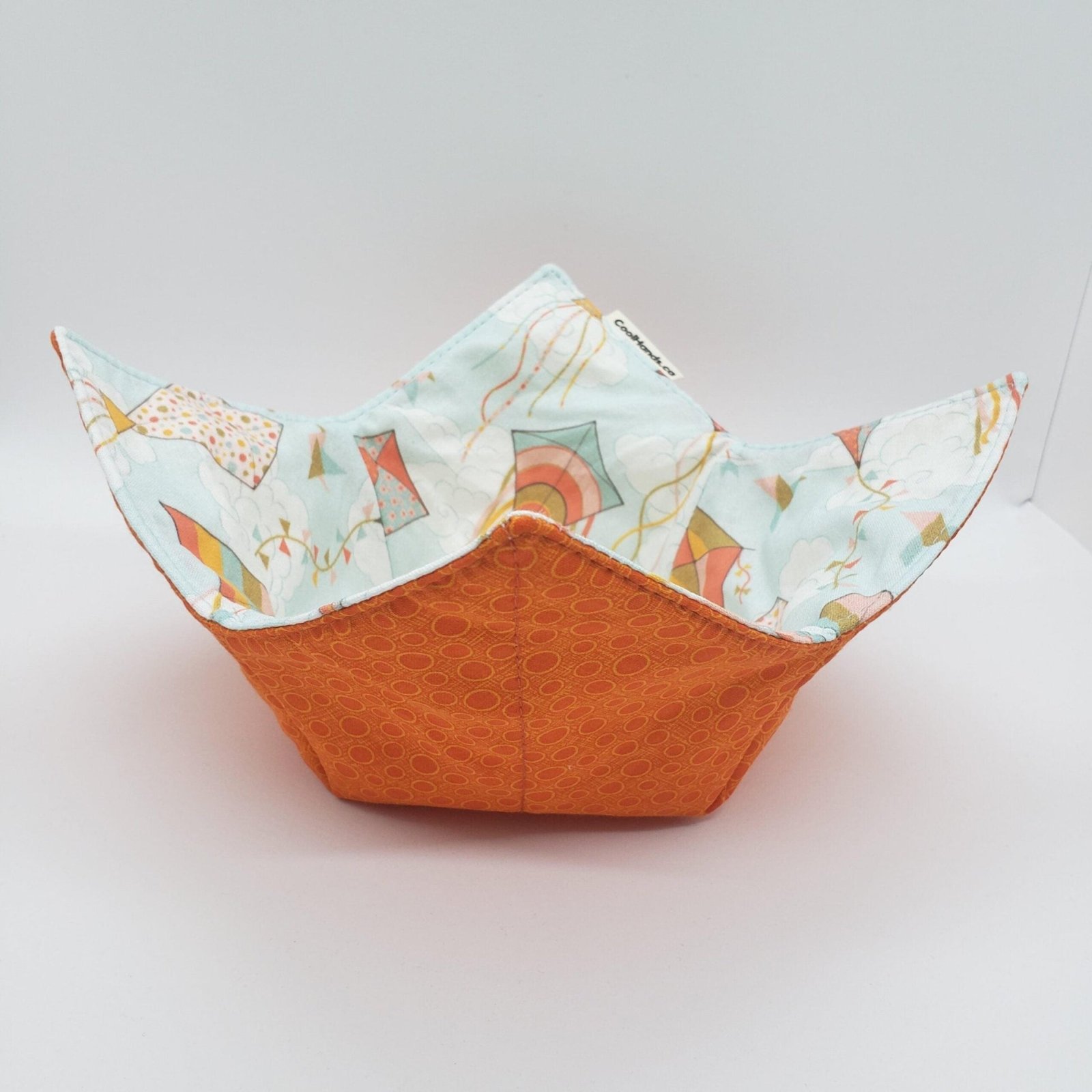
Ceramic bowls can reach temperatures exceeding 60°C after just a few minutes in the microwave, creating a significant burn risk. A cotton bowl cozy acts as a thermal barrier, allowing you to handle hot containers safely. Cool Hand Nukes produces handmade cozies in Nova Scotia using 100% cotton materials. Selecting high-quality cotton fabric for quilting ensures the cozy remains durable and functional.
A tea towel is often used as a makeshift handle, but it lacks the structure of a fitted cozy, which stays securely around the bowl to prevent spills and slips.
How a Bowl Cozy Protects Hands and Surfaces
Beyond hand protection, bowl cozies shield kitchen surfaces from heat damage. Hot ceramic can leave permanent rings on wood or laminate countertops. A fabric barrier dissipates heat, protecting your furniture. According to Health Canada kitchen safety guidelines, managing heat transfer is a key component of preventing household accidents.
Microwave Soup Reheating Safety: What the Cozy Can and Can't Do
Cotton is the only safe fabric choice for microwave use because it does not melt. Synthetic materials like polyester can soften, scorch, or ignite under sustained microwave energy.
A Reheating Sequence That Works for Soup
Heating times vary based on microwave wattage and food density. Never leave a cozy in the microwave unattended, and never operate the appliance empty. Sustained dry heat is the primary cause of fabric scorching.
Inspect the Cozy Before Every Reuse
Safety depends on the condition of your materials. Before each use, inspect for:
- Scorch marks or brown discoloration: Any sign of charring indicates the fibers have been compromised.
- Loose or frayed seams: Exposed batting can migrate and contact the bowl directly.
- Metallic embellishments: Buttons, snaps, or metallic threads pose a fire risk and must be avoided.
- Dampness: A wet cozy heats unpredictably; ensure it is completely dry before use.
Reheat in intervals of up to 2 minutes, stirring and checking the temperature between rounds.
What Makes a Microwave-Safe Bowl Cozy
A microwave-safe cozy requires four specific cotton components: quilting cotton for the exterior and interior, 100% cotton batting for insulation, and cotton thread. Avoid polyester, synthetic blends, or metallic accents.
Materials That Belong in the Microwave
- Outer fabric: 100% quilting cotton, pre-washed to prevent shrinkage.
- Inner fabric: 100% cotton, often a contrasting print.
- Batting: 100% cotton, specifically labeled as microwave-safe.
- Thread: 100% cotton; polyester-wrapped thread is not suitable.
- Avoid: Polyester fleece, metallic thread, or any trim containing plastic.
Materials and Cutting: Building Your Fabric Layers
You need two squares of outer fabric, two of lining, and two of batting. A standard size is approximately 25 centimetres square, which fits most common soup bowls. Precision in cutting ensures the layers align without puckering.
Layer each stack with the batting on the bottom, lining face up, and outer fabric face down. Pin the layers securely before quilting.
Sewing Step by Step: Darts, Stitching, and a Reversible Finish
- Quilt each stack: Sew a simple grid or diagonal lines through all three layers to secure the batting.
- Mark and sew darts: On each square, mark a dart at each corner, roughly 4 centimetres in from the point. Fold, pin, and stitch to create the bowl shape.
- Place right sides together: Align the two quilted pieces face to face.
- Stitch around the perimeter: Use a 1.25-centimetre seam allowance, leaving a 7-centimetre gap for turning.
- Clip the corners: Trim close to the stitching to ensure sharp points.
- Turn and press: Pull the cozy right side out and press the seams flat.
- Close the gap: Topstitch around the rim to seal the opening.
How to Use a Bowl Cozy for Soup, Noodles, and Leftovers
Place the bowl into the cozy before heating. This ensures you can lift the bowl immediately after the cycle finishes without direct contact with the hot ceramic.
Sizing by Bowl Dimensions
Measure your bowl across the top rim to determine the correct cozy size.
| Bowl Diameter | Cozy Fit | Notes |
|---|---|---|
| 4 to 6 inches | Small cozy | Cereal bowls, small soup bowls |
| 6 to 8 inches | Standard cozy | Most soup and noodle bowls |
| 8 inches and up | Large cozy | Wide pasta bowls, serving bowls |
Our cozies are designed to fit standard bowls with a 10 to 20 centimetre diameter.
Bowl Cozy Care Instructions: Washing, Drying, and Longevity
Machine wash your cotton cozy in cold water on a gentle cycle. Tumble dry low or air dry flat. Avoid fabric softener, which leaves a residue that reduces the natural absorbency of the cotton. According to textile care standards, avoiding harsh chemicals extends the lifespan of natural fibers.
Pick a Handmade Cozy and Get Reheating
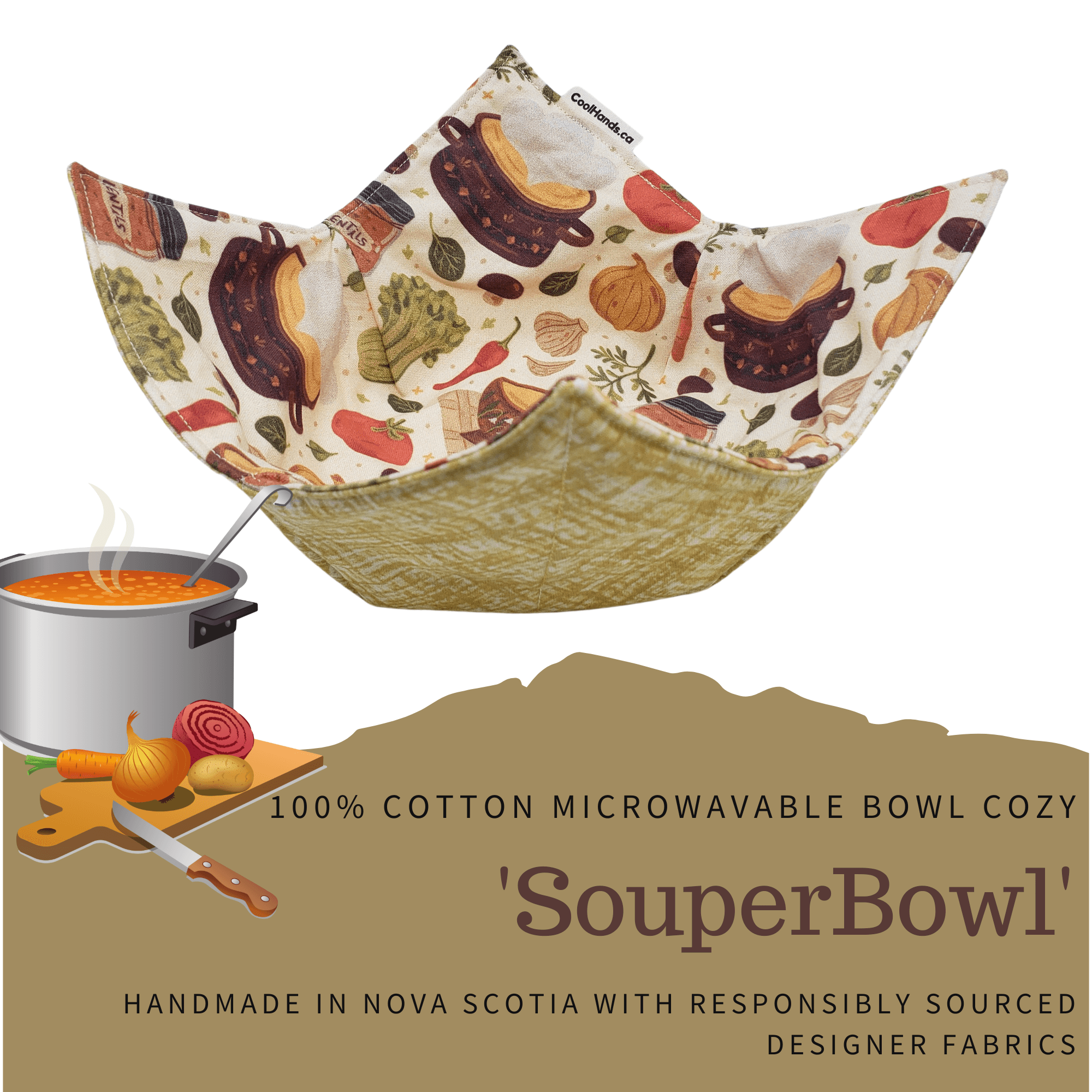
If you prefer a ready-made solution, our 100% Cotton Microwavable Bowl Cozy in the SouperBowl print is available for $20.00 CAD. Handmade in Nova Scotia, it is machine washable and fits bowls from 10 to 20 centimetres.
For unique requirements, our custom design option allows for personalized fabric choices. Every order ships free across the country.

Cool Hand Nukes provides handmade 100% cotton cozies with microwave-safe batting. Visit https://CoolHandNukes.com to browse our latest designs and make your next meal more comfortable.
Frequently Asked Questions
Can you microwave a cotton bowl cozy with soup in it?
Our cozies are made from 100% cotton and are designed to keep hands safe from hot bowls fresh out of the microwave.
How do you use a bowl cozy when reheating soup without burning your hands?
Our cozies fit a standard bowl with a 10 to 20 centimetre diameter.
Can a cotton bowl cozy catch fire in the microwave?
Pure cotton is generally considered microwave-safe for short reheating periods, but dry fabric overheated for too long can scorch. The main risks come from non-cotton materials, from leaving the cozy in far longer than needed, and from food that spatters and burns. Reheat in intervals of up to 2 minutes, remove the bowl promptly, and never leave the microwave unattended. Discard any cozy that shows scorch marks or thinning.
How do you wash and care for a microwave bowl cozy?
Most cotton bowl cozies are machine washable. Wash in cool or warm water with a mild detergent, then tumble dry low or air dry to reduce shrinking and preserve the quilting. Skip fabric softener, which coats cotton fibers, and avoid bleach. Check seams and batting after each wash, and retire the cozy if the layers separate or the fabric thins, since worn spots weaken heat protection.
